 Coupe-file disponible
 Belvédère supérieur ou Belvédère inférieur : lequel visiter si vous n’avez le temps que pour un seul
Le Belvédère supérieur abrite Le Baiser de Klimt et la collection permanente ; le Belvédère inférieur accueille les expositions temporaires et les appartements de parade du prince Eugène — comment choisir, et quand les deux se justifient.
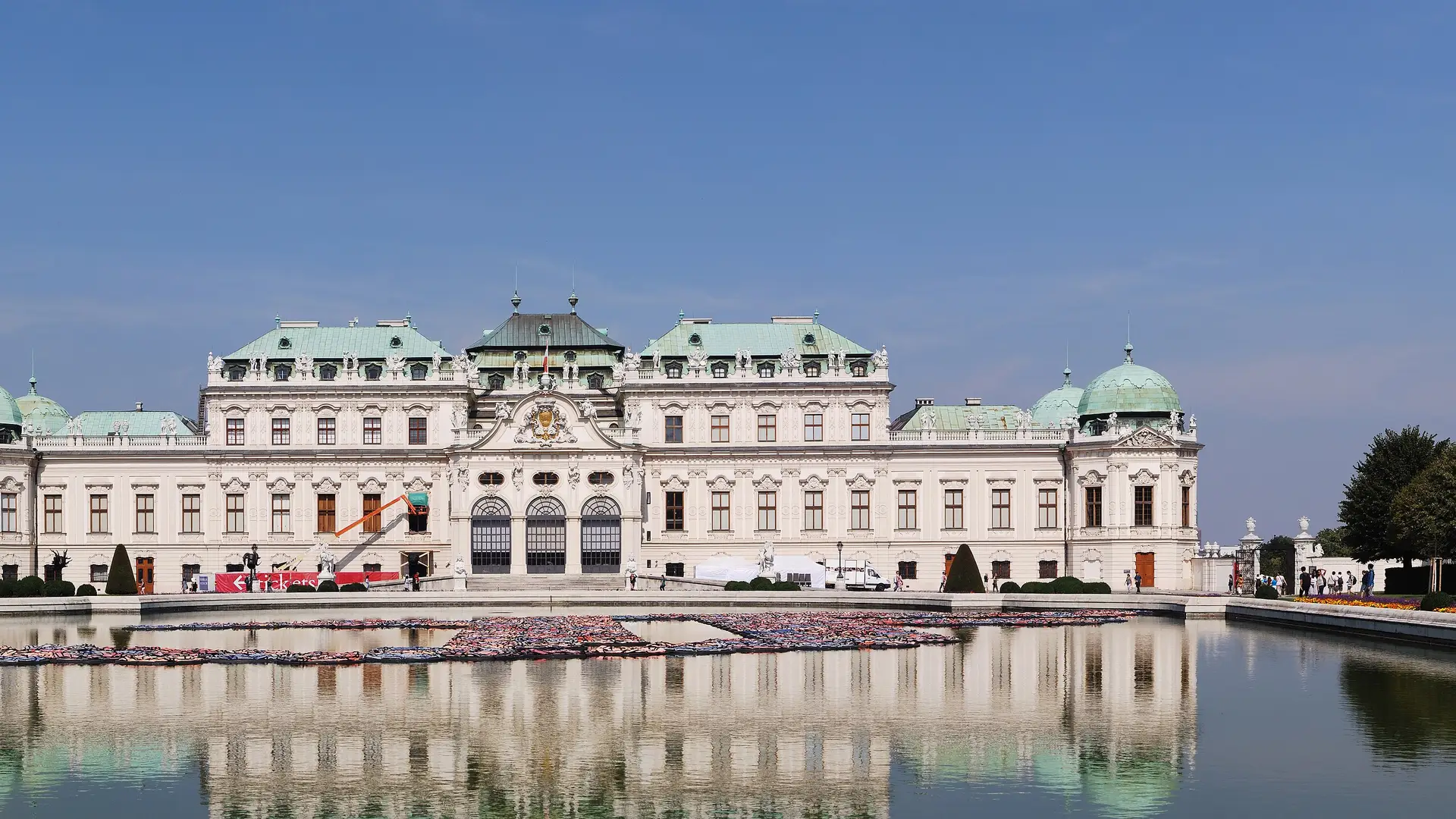
Les visiteurs qui découvrent les lieux arrivent souvent au Belvédère en pensant qu’il s’agit d’un seul bâtiment. Il s’agit en réalité de deux palais — le Belvédère supérieur (Oberes Belvedere) et le Belvédère inférieur (Unteres Belvedere) — construits l’un au-dessus de l’autre sur une douce colline, séparés par un jardin baroque à la française long d’environ quatre cents mètres. Tous deux furent commandés par le prince Eugène de Savoie et conçus par Johann Lukas von Hildebrandt ; le Belvédère inférieur fut achevé le premier, vers 1716, comme palais d’été résidentiel du prince Eugène, et le Belvédère supérieur fut terminé en 1723 comme Lustschloss destiné aux réceptions et aux divertissements d’apparat. Un troisième site, le Belvédère 21, se trouve à dix minutes au sud sur l’Arsenalstraße et présente l’art autrichien d’après 1945 et contemporain. Le Belvédère supérieur est la destination phare : la plus grande collection de Klimt au monde, la Salle des Marbres, les salles Schiele et le rez-de-chaussée baroque. Le Belvédère inférieur est le palais des expositions temporaires. Si vous n’avez le temps que pour un seul, la réponse est presque toujours le Belvédère supérieur. Ce guide explique les cas où ce n’est pas le cas.
Que trouve-t-on au Belvédère supérieur
Le Belvédère supérieur abrite la collection permanente de la Galerie autrichienne. Son premier étage comprend la Salle des Marbres (Marmorsaal), la pièce la plus majestueuse du palais, ornée d'une fresque au plafond de Carlo Innocenzo Carlone et offrant une perspective sur l'axe du jardin à la française vers le Belvédère inférieur et, au-delà, les flèches du centre de Vienne. Les galeries Klimt s'ouvrent de part et d'autre de la Salle des Marbres ; Le Baiser occupe un pan de mur entier dans l'une de ces salles attenantes, rejoint par Judith I de 1901, le portrait de Sonja Knips de 1898 et un ensemble substantiel de paysages peints par Klimt durant ses étés à l'Attersee.
Les salles Schiele présentent des œuvres majeures, dont les tardifs Famille et La Mort et la Jeune Fille. Oskar Kokoschka, Hans Makart, Ferdinand Georg Waldmüller et l'école Biedermeier sont également représentés. Les appartements d'apparat préservés du prince Eugène, les salles médiévales et baroques du rez-de-chaussée — Maulbertsch, les têtes de caractère de Messerschmidt et une remarquable collection gothique — complètent la visite. Le plus grand fonds Klimt au monde se trouve ici, vingt-quatre tableaux au total selon l'opérateur, puisés dans chaque phase de sa carrière. Deux heures est la durée standard conseillée pour une première visite ciblée ; les passionnés d'histoire de l'art y passent souvent trois à quatre heures et repartent avec le regret de ne pas avoir eu plus de temps pour les salles Schiele.
Que trouve-t-on au Belvédère inférieur
Le Belvédère inférieur était le palais d'été résidentiel du prince Eugène, plus petit et plus intime que le Belvédère supérieur, et il sert aujourd'hui de lieu principal d'expositions temporaires pour le musée. Ses deux galeries principales — la Salle des Marbres (distincte de celle du Belvédère supérieur) et la Galerie des Marbres (Marmorgalerie) — accueillent deux à quatre grandes expositions par an, généralement sur des thèmes proches de la collection du musée : une exposition approfondie de dessins de Klimt, une rétrospective Schiele, un panorama des femmes artistes autrichiennes, une thématique Biedermeier. L'Orangerie attenante et les Écuries du palais (Prunkstall) sont des salles d'exposition supplémentaires incluses dans le même périmètre de billetterie.
Le Belvédère inférieur conserve également une série d'intérieurs d'origine qui subsistent de l'occupation résidentielle du prince Eugène. La Salle des Grotesques (Groteskensaal), avec son plafond peint de créatures fantastiques, et le Cabinet doré (Goldkabinett), richement doré et autrefois tapissé de miroirs, donnent une idée de la manière dont Eugène vivait réellement au début du XVIIIe siècle. La Galerie des Glaces est le troisième de ces vestiges résidentiels. Les visiteurs intéressés par la texture vécue d'un palais de cour du premier baroque en trouveront davantage ici qu'au Belvédère supérieur, qui a toujours été un Lustschloss d'apparat. Les expositions en cours et les salles précisément ouvertes à un moment donné sont répertoriées sur belvedere.at ; le bâtiment n'est normalement fermé que durant les fenêtres de montage entre deux expositions.
Si vous n'avez que deux heures : choisissez le Belvédère supérieur
Pour environ quatre-vingts pour cent des primo-visiteurs, le bon choix est le Belvédère supérieur seul. Le Baiser est l'unique œuvre d'art que la plupart des gens viennent spécifiquement voir à Vienne, et se tenir devant lui — un panneau d'un mètre quatre-vingts centimètres carrés, recouvert de feuilles d'or véritable, derrière une vitre de protection dans une salle calibrée pour lui — est l'expérience qui justifie le voyage. Deux heures au Belvédère supérieur est le timing typique : environ quarante-cinq minutes dans les salles Klimt, vingt minutes dans les salles Schiele, vingt minutes à travers les appartements d'apparat du prince Eugène et la Salle des Marbres, vingt minutes à travers le rez-de-chaussée médian et baroque.
Essayer d'ajouter le Belvédère inférieur dans le même créneau de deux heures revient à bâcler les deux visites, et le Belvédère inférieur récompense particulièrement le rythme plus lent pour lequel ses expositions sont conçues. Les visiteurs qui tentent de faire les deux en une seule matinée repartent généralement en disant qu'ils n'ont vraiment vu ni l'un ni l'autre. L'exception est une visite d'une demi-journée de trois à quatre heures, où deux heures et demie au Belvédère supérieur suivies d'une promenade tranquille dans les jardins jusqu'au Belvédère inférieur et une heure trente dans une exposition en cours offrent une expérience plus complète. Le billet combiné existe spécifiquement pour ce cas ; la différence de prix entre le billet Belvédère supérieur seul et le combiné est modeste par rapport au doublement du contenu.
Quand le Belvédère inférieur est le bon choix (et le jardin entre les deux)
Il existe trois situations où le Belvédère inférieur mérite vraiment la priorité. La première est lorsque son exposition temporaire du moment est une rétrospective qui ne se produit qu'une fois par décennie, consacrée à un artiste ou un thème qui vous tient particulièrement à cœur ; consultez belvedere.at six semaines avant votre voyage pour savoir si cela s'applique. La deuxième est lors d'une visite de retour, quand vous avez déjà vu la collection Klimt lors d'un précédent voyage et souhaitez approfondir l'histoire de l'art autrichienne à travers le prisme curatorial que proposent les expositions temporaires. La troisième est en période de saison intermédiaire, lorsque le jardin à la française entre les deux palais est à son apogée et qu'une journée plus lente passée à déambuler entre les expositions des deux palais constitue en soi le plaisir.
Quel que soit le palais que vous choisissiez, le jardin baroque entre les deux est en accès libre et mérite qu'on lui consacre vingt minutes. Dessiné au début du XVIIIe siècle dans le strict style formel français par le jardinier formé à Versailles Dominique Girard, il s'élève sur trois terrasses du Belvédère inférieur au Belvédère supérieur, avec des fontaines étagées, des cascades, des sculptures baroques et des parterres de buis taillés encadrant l'axe central. La vue depuis la terrasse supérieure en direction du centre de Vienne — le dôme de la Karlskirche, la flèche de la Stephansdom, l'étendue de la ville historique — est l'un des plus beaux panoramas gratuits de Vienne. Les jardins possèdent plusieurs portes : au sud sur la Prinz-Eugen-Straße, au nord sur le Rennweg, et des entrées latérales sur la Landstraßer Gürtel.
Questions fréquentes
Où se trouve Le Baiser — au Belvédère supérieur ou inférieur ?
Le Baiser se trouve au Belvédère supérieur (Oberes Belvedere), dans les salles dédiées à Klimt, au premier étage, juste à côté de la Salle des Marbres. Le Belvédère inférieur accueille uniquement des expositions temporaires et les appartements d’apparat — la collection permanente Klimt ne s’y trouve pas.
Dois-je acheter un billet combiné pour les deux Belvédères ?
Si vous disposez d’au moins trois à quatre heures et que les expositions temporaires du Belvédère inférieur vous intéressent, oui. Si vous n’avez que deux heures ou que votre priorité est la seule collection Klimt, un billet exclusivement pour le Belvédère supérieur suffit amplement.
Peut-on circuler à pied entre le Belvédère supérieur et le Belvédère inférieur ?
Oui — le jardin baroque à la française relie directement les deux palais, comptez une dizaine à douze minutes de marche le long de l’axe central. L’accès au jardin est gratuit. Pour un trajet sans marches, le tram 71 relie les arrêts Schloss Belvedere et Unteres Belvedere, situés juste devant les deux palais.
Quel Belvédère est le plus impressionnant sur le plan architectural ?
Le Belvédère supérieur est le plus théâtral des deux, conçu par Hildebrandt pour être admiré depuis les jardins en contrebas. Le Belvédère inférieur est plus petit et plus intime, c’était à l’origine le palais résidentiel du prince Eugène ; il conserve la Salle des Grotesques et le Cabinet doré de son époque.
Les deux Belvédères sont-ils ouverts tous les jours ?
Oui. Le Belvédère supérieur est ouvert tous les jours de 09h00 à 18h00 selon l’exploitant ; le Belvédère inférieur est ouvert tous les jours de 10h00 à 18h00. Le Belvedere 21 est le seul site qui ferme le lundi. Les horaires peuvent être réduits le 24 décembre et lors des principaux jours fériés autrichiens.
Combien de temps dois-je prévoir pour le Belvédère supérieur ?
Deux heures est la durée standard recommandée pour une première visite ciblée couvrant les salles Klimt, la salle des Marbres, les salles Schiele, les appartements d’apparat et les collections médiévales et baroques du rez-de-chaussée. Les passionnés d’histoire de l’art y consacrent souvent trois à quatre heures.
Combien de temps faut-il pour le Bas Belvedere ?
Comptez environ une heure à une heure et demie, selon l’ampleur des expositions temporaires en cours et si vous incluez dans le même billet l’Orangerie et les Écuries du palais, toutes proches.
L’accès au jardin du Belvedere est-il gratuit ?
Oui. Le jardin baroque qui s’étend entre le Haut et le Bas Belvedere est en accès libre, ouvert tous les jours du petit matin jusqu’au crépuscule. Seuls les intérieurs des palais et les expositions de l’Orangerie nécessitent un billet.
Qu’est-ce que le Belvedere 21 ?
Le Belvedere 21 est un lieu d’art contemporain indépendant, situé sur l’Arsenalstraße, à une dizaine de minutes au sud du Haut Belvedere en tram D. Il présente l’art autrichien d’après 1945 et la création contemporaine. Ouvert du mardi au dimanche de 11h00 à 18h00, avec une nocturne le jeudi jusqu’à 21h00, il est fermé le lundi.
Puis-je voir la Frise Beethoven de Klimt au Bas Belvedere ?
Non. La Frise Beethoven (1902) est installée de façon permanente au Pavillon de la Sécession, à environ quinze minutes à pied du Haut Belvedere en traversant la Karlsplatz. Elle se marie naturellement avec une visite du Belvedere, mais nécessite un billet distinct, à acheter auprès de la Sécession.