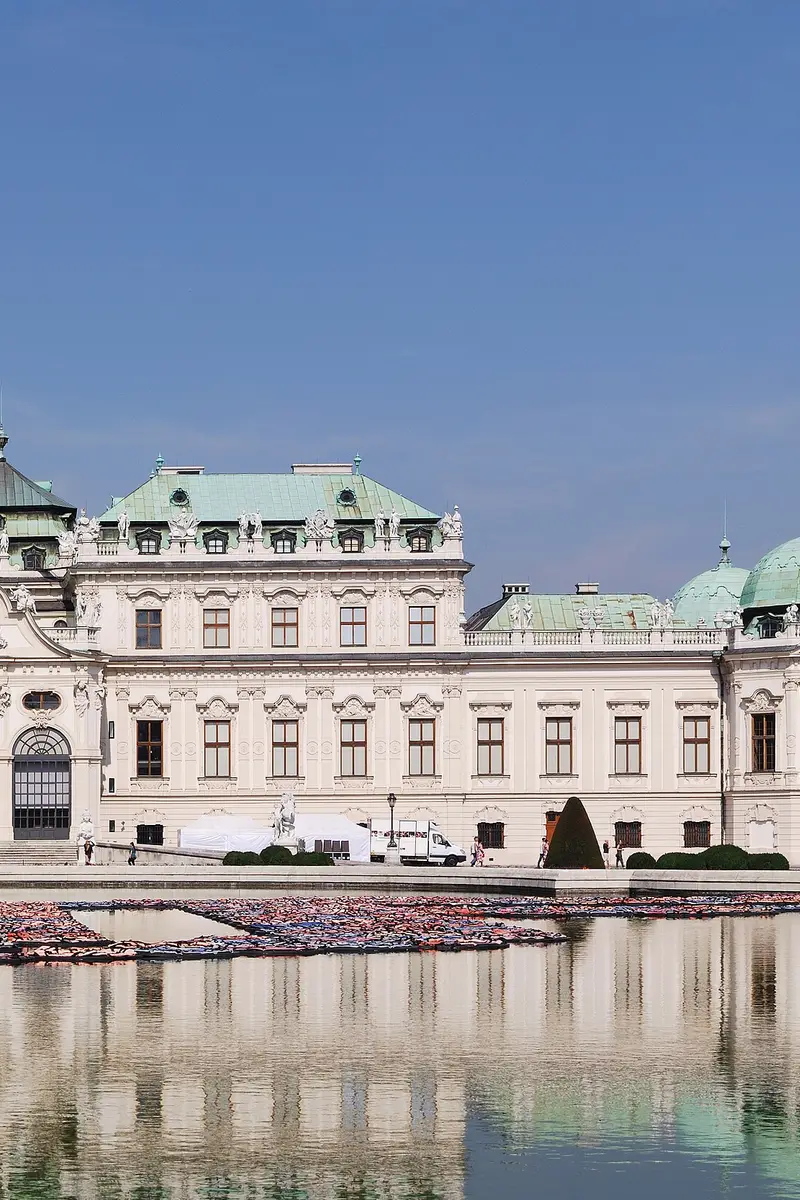
The Belvedere is two palaces — Upper and Lower — built between 1697 and 1723 as the summer residence of Prince Eugene of Savoy, the Habsburg Empire's most successful general. Upper Belvedere is the imperial-facing one, at the top of a formal garden that drops 400 metres down toward central Vienna. Lower Belvedere is where Eugene actually lived. He died childless in 1736; the Habsburgs bought the complex in 1752 and made it a royal gallery.
In 1908 Gustav Klimt sold *The Kiss* to the newly-formed state museum for 25,000 crowns — the highest price ever paid for an Austrian painting at the time. It's been at the Belvedere ever since. Today the collection holds 24 Klimts, 290 Schieles, key Oskar Kokoschkas, and the largest single holding of Biedermeier paintings in the world.
The Kiss sits in its own gallery, which is both a blessing (you can actually stand in front of it) and a bottleneck (so does everyone else). Skip-the-line gets you into the building past the main ticket queue; inside, arrive early or book a weekday slot to get 60 seconds alone with it.
From 1781 the imperial picture gallery opened to the public inside the Upper Belvedere, making it one of the first public museums in Europe — decades before the Louvre. That civic origin still shapes the visit: your Schloss Belvedere tickets put you on the same first-floor route past Klimt's gold-period rooms toward the double-height Marble Hall, whose terrace frames a celebrated view over the formal garden to St Stephen's spire across the old town. Most visitors miss it; step out before you leave.